
Are apps worth it?

$320,000 per minute: That's how much money flowed through mobile app stores in 2021. At the same time, spending on mobile advertising amounted to 295 billion dollars, and is even expected to increase to 350 billion dollars in 2022. Mobile, digital customer experiences are no longer just a dream of the future. But how can we help companies choose the right tools for a seamless user experience?
The COVID-19 pandemic has accelerated digital transformation and pushed companies worldwide to create safer and more efficient experiences for their customers and employees. Reliable and easily accessible digital tools are essential here. But which tools are the right ones for which requirements?
The first product that comes to mind is developing a native app, but the chances are poor: The market is already oversaturated with over 4.8 million apps (around 32,000 are published every month for iOS alone), and app development costs are high at 20,000 to 300,000 dollars. In addition, websites are increasingly being optimized for mobile operating systems. Is it still worthwhile to develop an app?
Developing apps for the travel industry: A case study from... and dos Santos
In our work at... and dos Santos, we addressed this question for our customers from the travel industry. We examined the costs and efficiency of available digital tools and observed general user behavior and customer interactions with existing digital services. This allowed us to get an accurate picture of which tools are the most popular, what investments they require, and which features are useful for specific business needs.
Why companies need to adapt to mobile use
The facts are clear and no surprise: Five billion people currently own a mobile phone and the figure is likely to reach 7.3 billion by 2025. The share of mobile Internet traffic compared to desktop usage is steadily increasing, while the World Advertising Research Centre (WARC) predicts that by 2025, at least 72% of global Internet users will go online exclusively via smartphones.
For companies, it is no longer a question of whether they should adapt their websites and products to mobile use, but rather how quickly and effectively they can do so.
Native apps vs. responsive websites: Which is the better investment for your company
Beyond the “competition” between mobile and desktop use, there is an internal conflict between native apps and responsive websites. In short, native apps are downloaded to a mobile device (and store data there), while responsive websites are desktop websites that have been adapted for mobile use. In order to decide which tool best meets a company's goals, examining the specific functions and technical requirements of both options is a first and decisive step.
What are the opportunities and risks for native apps?
Native apps are specifically designed and developed for specific mobile operating systems (OS). For Apple devices (which use iOS), for example, apps are created in the Swift language and developed according to Apple's guidelines. Before an app is available to users, it goes through an App Store review process. As shown in Figure 1, native apps offer significant benefits in terms of performance and design, while high development costs are often an obstacle for companies to invest in them.

Another distinction between native 4Apps can be made using airports as an example. There are dedicated apps that are developed by a single airport and therefore bear sole responsibility and investment risk. While dedicated apps offer full control over design, branding, and data management, they only address a smaller market and often have less value for users due to very specific benefits.
In contrast, shared apps have a wider reach as more airports are involved. Developing an app for multiple goals can increase user engagement and reduce marketing costs. Sharing development costs between companies also reduces individual investment risk. However, shared apps may require slower, more complex decisions and lower branding potential.
What are the opportunities and risks for responsive websites?
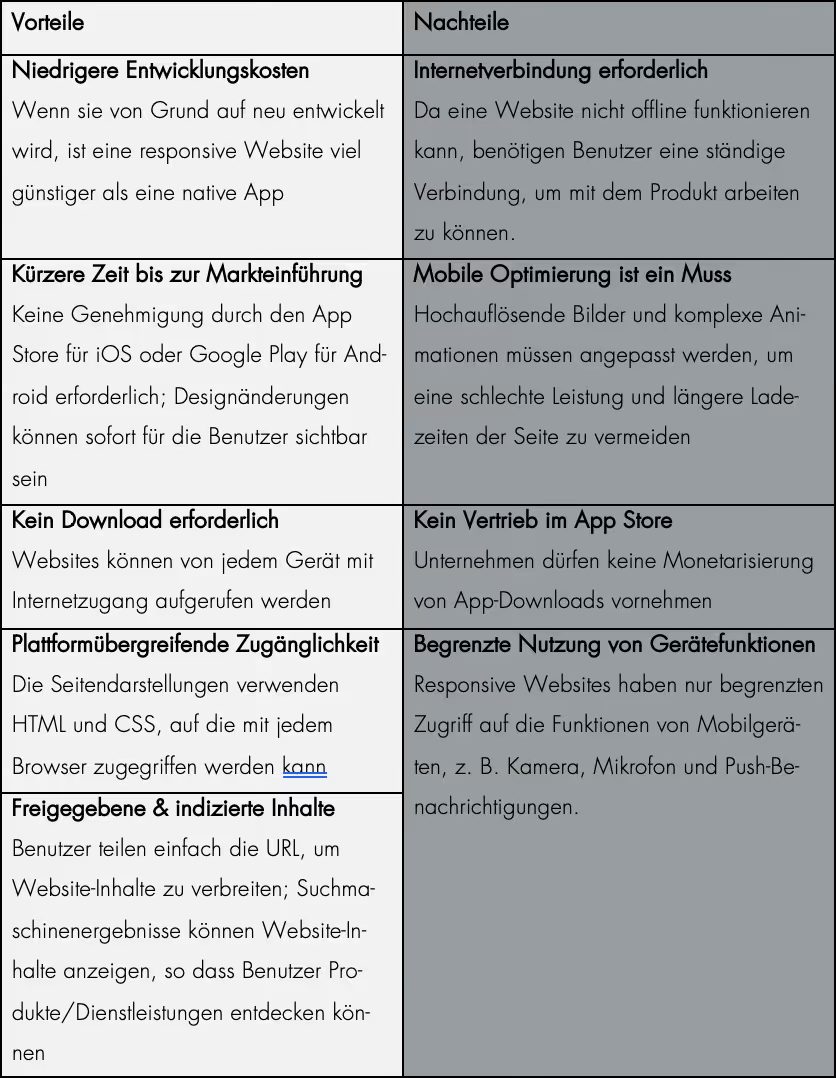
Have you ever tried to buy something from your phone on a website and clumsily zoomed, typed, and scrolled with your finger to make sure you've captured all the details correctly? Unfortunately, this is the reality when using websites that have not been optimized for mobile devices. This is where responsive websites come into play. By developing content that is suitable for every screen size and shape, companies can provide a smoother user experience while taking advantage of the benefits of a browser website, as shown in Figure 2.
Deciphering user behavior: How companies can understand the needs of their target group
To make a wise decision before companies commit to a specific development path, they must understand customer behavior. The aim is to determine how users prefer to contact companies and whether this depends on the products or services offered.
Let's look at some basic figures:
- In 2020, the average smartphone user had 40 apps installed on their phone.
- On average, apps are deleted 5.8 days after they were last used (10.8 days for travel apps)
- Smartphone users spent 4 hours a day online in 2020, 88% of them using apps.
- Users spent around 201.8 minutes/month shopping in apps in 2021, compared to 10.9 minutes on websites.
- Overall conversion rates on apps are 120% higher than on mobile websites; retailers report 90% higher add-to-basket rates on apps compared to mobile browsers.
If you skim through these reports, you could quickly get the impression that a native app is the best investment for any company. However, actual investment data can reveal surprising findings. A study on user behavior at a European airport showed that the mobile app was only preferred for impulsive, short-term inquiries, while almost all parking reservations were made via the desktop website (99%). During the pandemic, passenger traffic fell by 72% and mobile app usage fell by 74%, suggesting that there is a direct proportionality between sessions on mobile devices and the number of passengers who visited the airport. As many companies have learned the hard way, stable passenger traffic is no guarantee for the future. From this perspective, dependency on the mobile app appears to be a high risk.
Understanding the customer journey as a basis for investment decisions
The customer journey also plays an important role: As a rule, most users first discover a company on a website and interact there before switching to the more efficient native app when they have achieved a certain level of engagement. What does this mean for airports? Well, 80% of our customer's customers visit the airport less than four times a year, and 92% only search online for flight-related information that can be found on the airport's website in much less time than downloading and logging into an app.
So what level of engagement can we expect when interactions are so infrequent? In such cases, apps must offer many more incentives and benefits to attract and retain users because interactions are so infrequent. Examples include app-exclusive offers or personalized offers. Companies need to know not only which tools to build, but also how to adapt those tools to get the most ROI. It may make more sense to develop a more expensive app that targets specific revenue channels than to invest in a lower-cost website that's meant for everyone.
Native app vs. responsive website, or both?
Of course, it's ideal to develop both an app and a responsive website — just as Instagram and Uber did. However, resources are often limited and a decision must be made. Ultimately, the decision depends on how often people interact with the company and whether the costs of developing an app are justified. This is not the case at most airports. In this case, companies must figure out what additional benefits or rewards they can offer users and how that fits their business goals.
No matter which path you choose, by investing time and effort to understand revenue potential and analyze customer behavior in these areas, companies can develop tools that provide lasting added value to their users.
Key Takeaways to Decide Native App vs. Responsive Website
- A rapidly growing share of online traffic comes from mobile devices, and the success of digital products depends heavily on how well they are adapted to mobile use.
- Although native apps generally perform better on mobile devices by offering easier use and greater personalization, the high development costs and lengthy approval processes are often a deterrent for companies that want to make such investments.
- For companies such as airports, which most users rarely stop by, a website is likely to cover most needs, and an app would usually be redundant unless it offers significant benefits or rewards to attract and retain users.
- An ideal solution would be to have both a native app and a website that reflect the same products and services while being efficient. However, depending on the specific needs of the company and the user journey, one of the two options may be preferred
- When deciding which digital tools to develop, companies compare the main features of each option and analyze user behavior in all relevant aspects to achieve a targeted investment with the highest possible ROI.