
Man or machine?
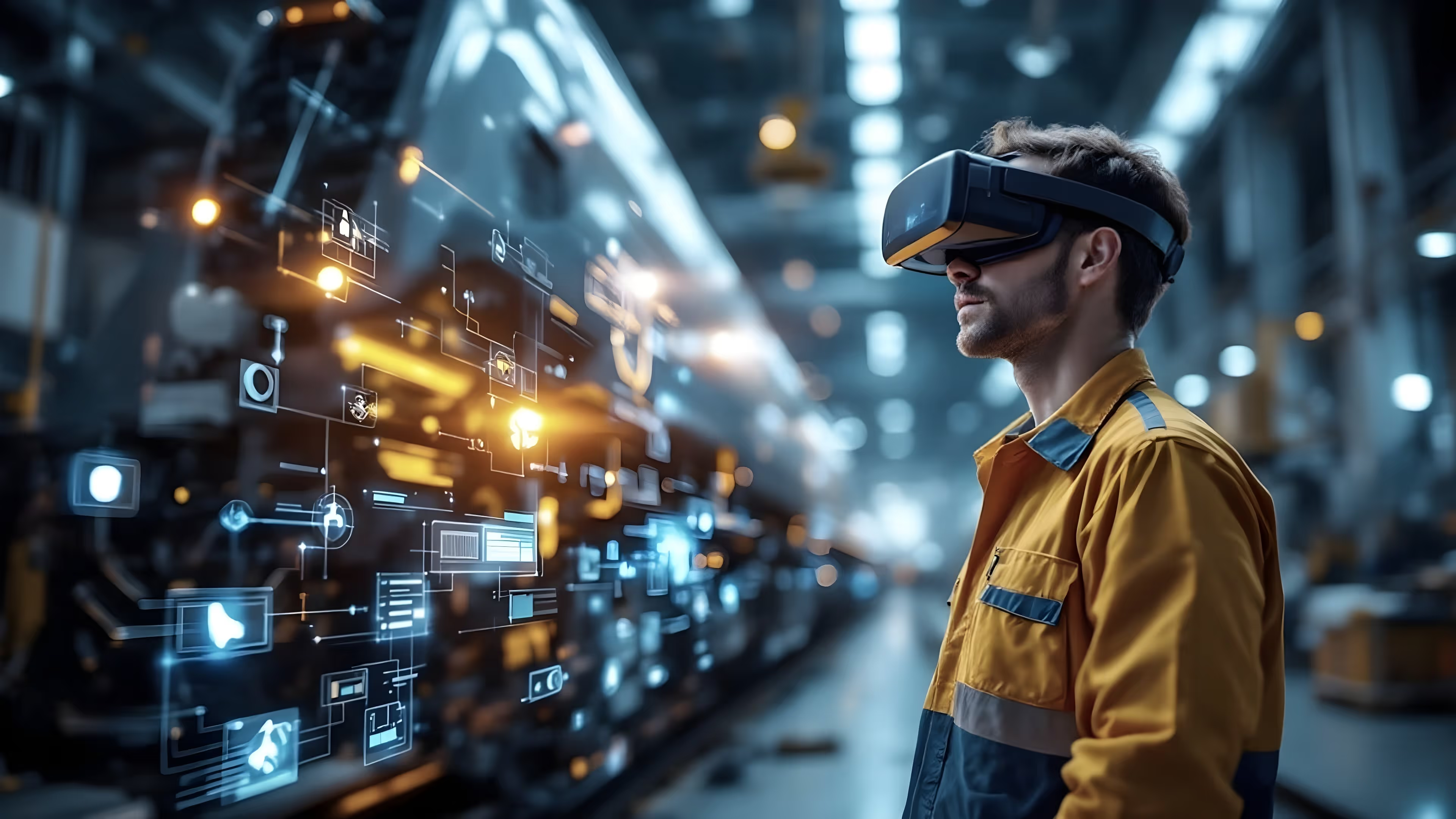
Why the future lies in connectivity.
Artificial intelligence (AI) is increasingly penetrating our everyday lives and business processes. It automates processes, optimizes decision-making and opens up completely new opportunities for interaction. In 2024, 20% of companies in Germany said they were using AI technologies — a significant increase compared to the previous year, when the share was still 12%. But this development brings a crucial question into focus: How do we design the connection between people and digital technology in such a way that it expands people rather than replaces them?
The essence of human digitality
Human Digitality describes exactly this change — the balance between technological innovation and human experience. While concerns about “dehumanization” through AI often dominated in the past, today it is about intelligent coexistence. The focus is no longer solely on the question of what AI can do, but on how it can supports and empowers people Complements skills.
Human digitality is more than a technological development — it is a collective cultivation process. Individuals and organizations are empowered not only to use the transformative potential of digital systems, but also to use them specifically in such a way that they have knowledge and creativity and increase efficiency without displacing the human component. It is about “tamed” digitization — one that strengthens people instead of replacing them.
A few examples of how AI is already driving human digitality forward:
- Intelligent search systems and knowledge management: Platforms such as Perplexity AI or Google's generative AI provide direct, contextual answers to complex queries. This technology not only replaces traditional search mechanisms, but also expands cognitive potential of humans by making complex information available more quickly.
- Personalized shopping advice: Companies like Zalando and Shopify use AI-powered purchasing consultants who analyze individual preferences and provide tailored product recommendations. As a result, Decision-making processes more efficient, customer satisfaction increases and The entire buying process is becoming more intuitive.
- Dynamic content recommendations: Netflix and Amazon rely on AI algorithms to personalize content based on individual preferences. This type of AI-powered personalization creates an improved user experience by increasing relevance and user engagement.
- Individual experiences: Platforms such as Spotify use AI to create personalized playlists that adapt to listeners' preferences and optimize the music experience.
- AI in healthcare: The AI, called IBM Watson, analyses patient data to enable personalized health management. What today supports medical diagnoses and improves treatment decisions was still the size of a parent's bedroom in 2011 — an impressive example of the rapid development of AI technologies.

Despite these impressive progress, society is faced with the challenge of actively and responsibly shaping human digitality. In Germany, 62% of people continue to express concerns about data protection and security, while 46% fear losing control as a result of increasing use of AI. It is therefore not only about the development of technological capabilities, but above all about Digital literacy — digital competence that goes beyond simply understanding technology and enables the responsible use of AI.
The following are necessary:
1. A conscious and thoughtful use of AI technologiesto make good use of their potential.
2. Digital emancipation — the ability not only to consume digital tools, but to actively use them for personal development.
3. A clear ethical foundation for developing and deploying AI. Digital Ethics play a decisive role in establishing binding standards for dealing with AI and regulating data protection, privacy and digital surveillance.
Companies that integrate AI in a human-centered way ensure long-term relevance and competitive advantages. Anyone who focuses on human digitality creates a digital future that does not focus on increasing efficiency at any price, but sees people as a central authority. AI can't just automate — it can empower people, expand their capabilities, and open up new horizons.
Now is the right time not as a threat but as an opportunity for a more humane digital future to understand.
sources
Every fifth company uses artificial intelligence - Federal Statistical Office, 2024