
The driver's cab of locomotives of the future
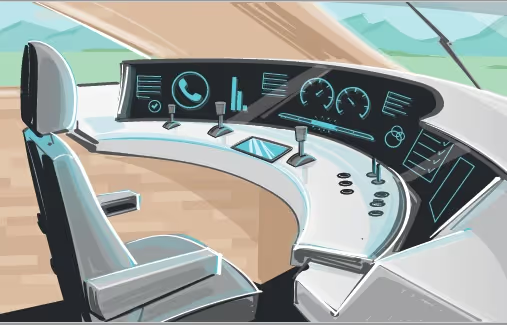
The driving rooms of all vehicle generations were characterized by the current state of society, technology and rail operations. They therefore also reflect changes in these areas. What is modern technology today will eventually be replaced by something new and find its place in railway history. But what will the management rooms look like in 20 or 30 years? This question was considered in the “Train Driver of DB Fernverkehr AG” section with various experts from the innovation agency “and dos Santos GmbH” and especially with train drivers — with interesting results.
A system that combines the strengths of people with the strengths of technology is successful.
When developing driver's cabins, it is clear how much technology is increasingly adapting to people. The increasingly ergonomic design of interfaces between people and machines is a trend that is continuing both within and outside the railways and will continue to contribute to changing driver's cabins. For example, while previous generations of train drivers had to do their work primarily while standing (back then they also referred to as the driver's cab), today a driver's seat that can be adjusted to body size and weight is a matter of course standard. The installation location or the shape of the elements used to control the vehicle are also increasingly appealing to the person in the driver's cab in the truest sense of the word.
It is therefore foreseeable that in future driver's cabins, more and more vehicle functions can be controlled from one location. Paths to switches or shut-off valves are becoming less and less necessary. With electric locomotives, you had to squeeze yourself into a tight equipment framework in the engine room to switch off a traction motor a few years ago, but with current locomotives, you can conveniently group out a traction unit using touch screens without leaving the driver's cab.
This is made possible in particular by another megatrend that will inevitably be recognized in future driver's rooms — digitalization. Although it makes technology ever more complex, this complexity can also be controlled by simplifying operation. It wasn't that long ago that a telephone needed a cable and had a dial. Today, we're swiping across the small screen of a mobile device whose computing power and storage capacity required a mid-range PC 20 years ago.
Future developments
Based on systems such as automatic drive and brake control, more and more assistance is available when driving a locomotive. And digitization also enables a high-level of networking, which is already commonplace in various forms. The transfer of diagnostic data from vehicles to maintenance has been standard for a long time and can be extended in many ways, for example for remote maintenance.
These developments are also of fundamental importance for autonomous driving. Against this background, the need to develop the driver's cab as a workplace may be called into question. Autonomous driving will undoubtedly play an increasing role in the next few years. However, it is difficult to determine whether and when autonomous rail driving will replace all human-controlled journeys. On closer inspection, it is easy to see that in addition to autonomous trains, trains controlled by people will still be running in a few decades. This time is simply too long not to dedicate yourself to developing driver cabins.
In addition, it is fundamentally possible to ask whether the replacement of the human system with the technology system does not also mean the loss of human strengths. Just like people, technology also has its strengths and weaknesses. For example, while technology is better than humans at monitoring processes over a longer period of time without errors, humans have a better ability to assess and react to an unexpected situation. For example, a system that combines the strengths of technology with the strengths of people could be more successful than a system based solely on technology.
Ergonomics, Digitalization, Connectivity
Ergonomics, digitization, connectivity — these trends of our time are clearly visible. Let us mentally imagine a possible future and let the train drivers (Tf) describe their work with such a vehicle. It could look like this:
Preparing for the train trip
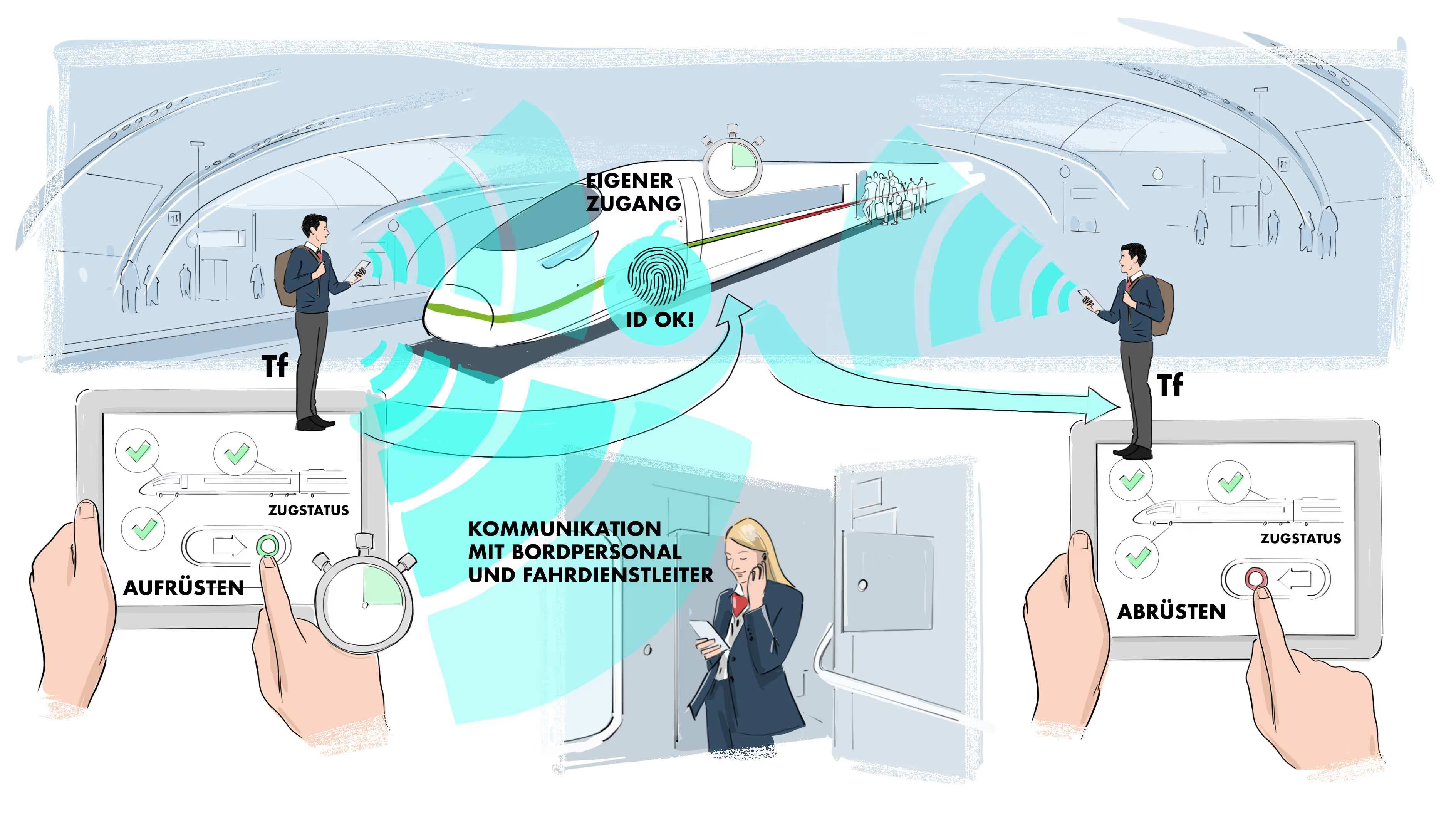
I have already checked the location of the vehicle and how to get there in an app on my tablet on the way to the parking station. I have already received information about which vehicle it is, where it is standing, what operating state the vehicle is in and what faults it has. At the location, I find that both the location and the status match exactly the information that was transmitted to me. I go to the driver's cab, where I also start my first trip. The vehicle connects to my tablet and recognizes me as Tf. As a result, the door unlocks automatically. When I enter the driver's cab, the voice control greets me personally. The seat, lighting, displays and air conditioning automatically adjust to my profile.
I put my backpack next to the driver's seat, hang my jacket on a bracket behind the seat and sit in the driver's seat. When I sit down, the vehicle recognizes my presence at the driver's desk and presents me with its current status. The necessary tests (e.g. brake test, train control system test runs) and preparations (e.g. loading the timetable display) have already been completed.
I see a message on the display that all work (such as cleaning, maintenance) has been completed and that the vehicle is approved and ready to go. I'm just checking that this message is there. Due to a faulty brake, the vehicle is not reaching its full braking power today. I confirm the faults in the display. The timetable has already been adjusted accordingly and the speeds that deviate from the normal state are marked with a different color display. At the same time, the operations center has also received information about the speed restrictions. All faults have already been automatically transmitted to the dispatching agency and the workshop. I can see this from an icon in the fault list.
Start of the train journey
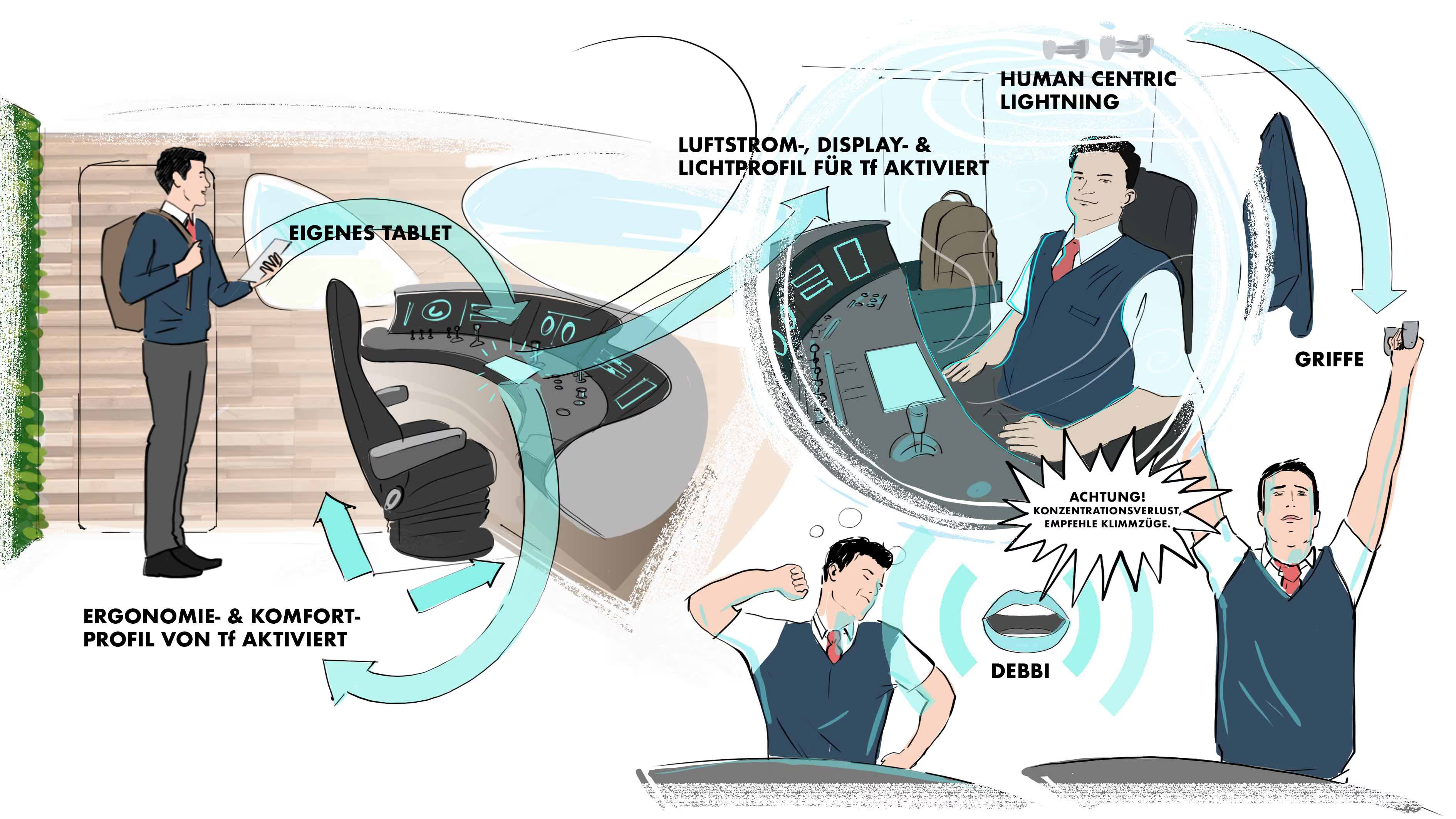
In the event of an operational turnaround, the train recognizes from its location that a change of direction is taking place. After stopping, the train is automatically secured against rolling away. The current train data is also transferred to the other driver's cab without my intervention. This also includes the limited braking capacity as a result of the faulty brake. The continuing TF will therefore also automatically receive an updated timetable display, in which the speeds are adjusted accordingly. I'm deactivating my cab. The necessary test runs and other processes to prepare for onward travel in the other driver's cab begin immediately. The language assistant helps me to ensure that I don't forget anything.
As a continuing TF, I connected to the train via my tablet before the train arrived and found out about the status of the train. So I already know that a brake is faulty. After my train has arrived, I enter the driver's cab directly through a separate door. The necessary tests (e.g. brake test, train control systems test runs) and preparations (for example loading the timetable display) have already been completed. After I have acknowledged all faults and thus confirmed my presence, the train automatically reports to the dispatcher (Fdl) as “ready to go”. It can go on.
Park the train at the end of the journey
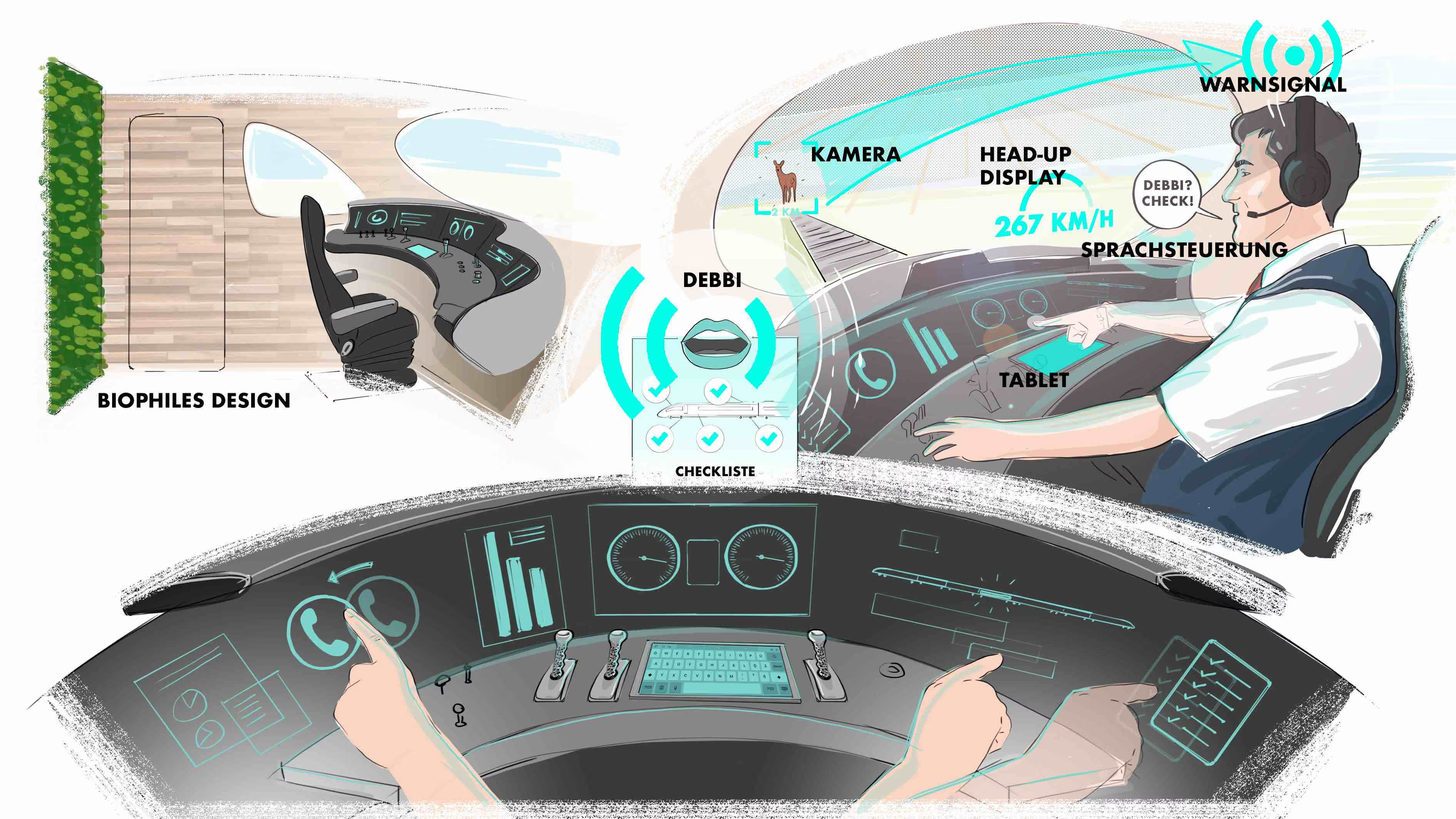
After the train ride, I drive the vehicle to the parking lot. Information about the continued use of the train is continuously transmitted from the system to the vehicle for dispatch. The data for the subsequent service is therefore automatically available. I'm deactivating the cab. The vehicle automatically secures itself against rolling away. Based on the information about its continued use, the time and the outside temperature, it recognizes in which state it must be switched off.
It shows me that on the display. A few seconds later, the display shows the message that the vehicle doesn't need my help for anything else. I'm leaving the train and moving on to my next task.
outlook
A driving shift could run like this or something similar in the future. The scenarios described here are based on existing technologies and developments. The challenge therefore lies primarily in implementing existing innovations. To this end, the standard for designing driver cabins and operating concepts must be further developed together with operators, manufacturers and stakeholders. On the basis of the fourth EU railway pact, the focus must be on people and their specific factors (human factors).
sources
ERA Guide — Safety Management System Requirements for Safety Certificate or Safety Approval V1.2.
Results of the “Führerraum der Zukunft” project (DB Fernverkehr AG, Tf division, “and dos Santos” GmbH).
COMMISSION REGULATION (EU) 2018/762 of 8 March 2018 on common security methods with regard to the requirements for safety management systems in accordance with
Directive (EU) 2016/798 of the European Parliament and of the Council and repealing Regulations (EU) No 1158/2010 and (EU) No 1169/2010.
author
Steffen Renisch, Head of Train Driver Qualification, DB Fernverkehr AG, Frankfurt am Main
Published in Your track 8/21, used with the kind permission of Bahn Fachverlag GmbH https://www.system-bahn.net
illustration
Christian Sommer, summer illustration, 20357 Hamburg