
Business Plan Phase 2025

Ready to go?
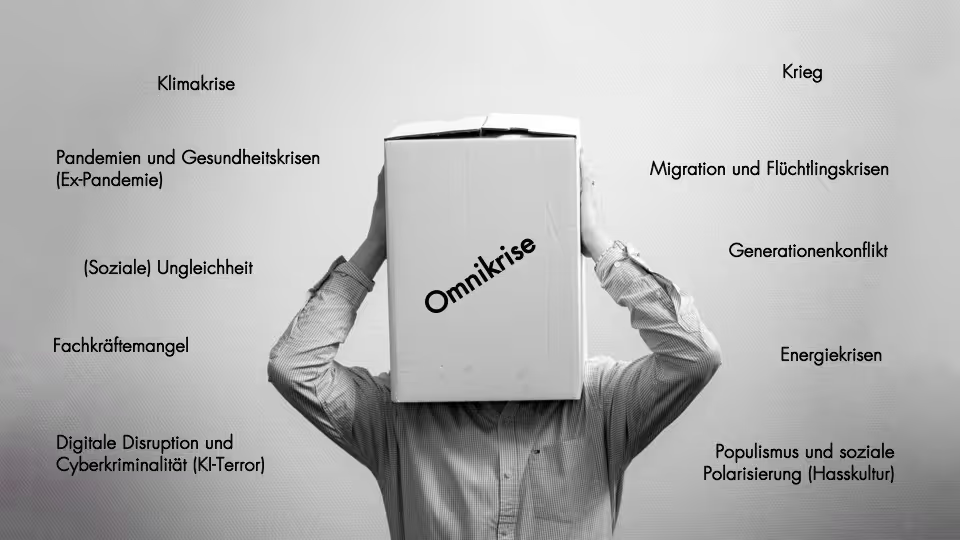
It's that time again - the time of forecasts for the next financial year has begun. Many managers are currently busy planning for 2025 and that is not easy at all - especially for colleagues in Europe and in Germany in particular. Because many alleged imponderables and negative trends are almost tempting people to remain in shock and feel like closing the 2024 financial year this summer (true to the motto “Just survive 'til '25”), instead of recognizing and taking advantage of the opportunities that exist. Honestly? I am firmly opposed to this position, because it is certain that the challenges and obstacles we are already facing will become even greater if we do not act actively now. What we are currently experiencing is not just a crisis, but an omnicrisis — a phase in which several crises occur simultaneously and reinforce each other.
What crisis?
Every day, whether professionally or privately, we are confronted with the many crises out there, be it the climate crisis, the shortage of skilled workers, social inequality or the threats of cybercrime, artificial intelligence and digital disruption. In the past, we have referred to these situations as multiple or batch crises. However, the current situation is a real omnicrisis — a situation in which several crises not only coincide, but also reinforce each other in their effects. For example, the intergenerational conflict is exacerbating the shortage of skilled workers, and the lack of future-proof qualifications can lead to greater social inequality.
chance
You can regard an omnicrisis as either bad or good. I tend to see them positively. Why Omnicrises often herald epochal change, if they do not even initiate it. Such changes offer tremendous opportunities for those who recognize and take advantage of them early on. For managers and executives who are now focusing on 2025, it is crucial to thoroughly analyze these developments and develop appropriate strategies. They must be included in every business plan for the next year.
2025
It is likely that the omnicrisis will continue to worsen in 2025. Two decisive factors will further fuel the fire: the progressive use of artificial intelligence (AI) and the political situation. examples? Here are two:
Artificial intelligence and the job market
According to the International Monetary Fund (IMF), AI has enormous potential for productivity gains, but also risks such as mass unemployment and social inequality. Companies and countries must invest in education and training (awareness, acceptance, skills) to overcome the challenges and take advantage of the opportunities offered by AI. Without these adjustments, massive disruptions in the labor market are to be expected.
Political uncertainties
The presidential elections in the USA will have far-reaching effects on Europe. A fairly certain victory for the Republicans and Donald Trump will not only result in less US involvement in NATO and less support for Ukraine, but will also reignite the economic war with China, increase national protectionism and jeopardize markets. This would force Europe to assume more responsibility at various levels.
And?
Managers must be proactive and prepare for the challenges ahead. Here are a few steps you can take now:
1. Actively shape the future: Don't wait and see, but actively shape the future of your own area of responsibility in the company. This means continuing strategic investments despite uncertainties and transforming the core business.
2. Use transformation trends as an opportunity: The six major transformation trends — Human Digitality, Conscious Economy, Co-Society, Mindshift Revolution, Glocalization and Eco Transition — offer numerous opportunities that need to be exploited. These trends are not only challenges but also opportunities for innovation and growth.

The six major transformations in detail
Human Digitality: The intelligent use of network technologies will be decisive. Companies should invest in digital skills and implement new technologies to remain competitive.
Conscious Economy: The transformation from a purely meritocratic society to a purpose-oriented society offers the opportunity to achieve competitive advantages through sustainable and meaningful business practices.
Co-Society: Social divisions create new connections. Companies can reduce social tensions and promote innovation through cooperation and joint projects.
Mindshift Revolution: Social inequalities result in strong identities. By promoting diversity and inclusion, companies can not only strengthen their workforce, but also tap into new market segments.
Glocalization: The change from global uniformity to local diversity offers the opportunity to attract new customers by adapting to local markets and needs.
Eco Transition: The transition to comprehensive sustainability is not only ecologically necessary, but also offers economic benefits through efficiency gains and new business opportunities in green technologies.
Design today
The challenges of the omnicrisis are great. But they also offer tremendous opportunities for those who are willing to act proactively and take advantage of transformation trends. It is time to look intensively at the upcoming changes in order to be successful in 2025. See the omni-crisis not as a threat, but as an opportunity for innovation and growth. Start preparing now to optimally position your company for the future.