
DB Fernverkehr & and dos Santos win BOLD Award
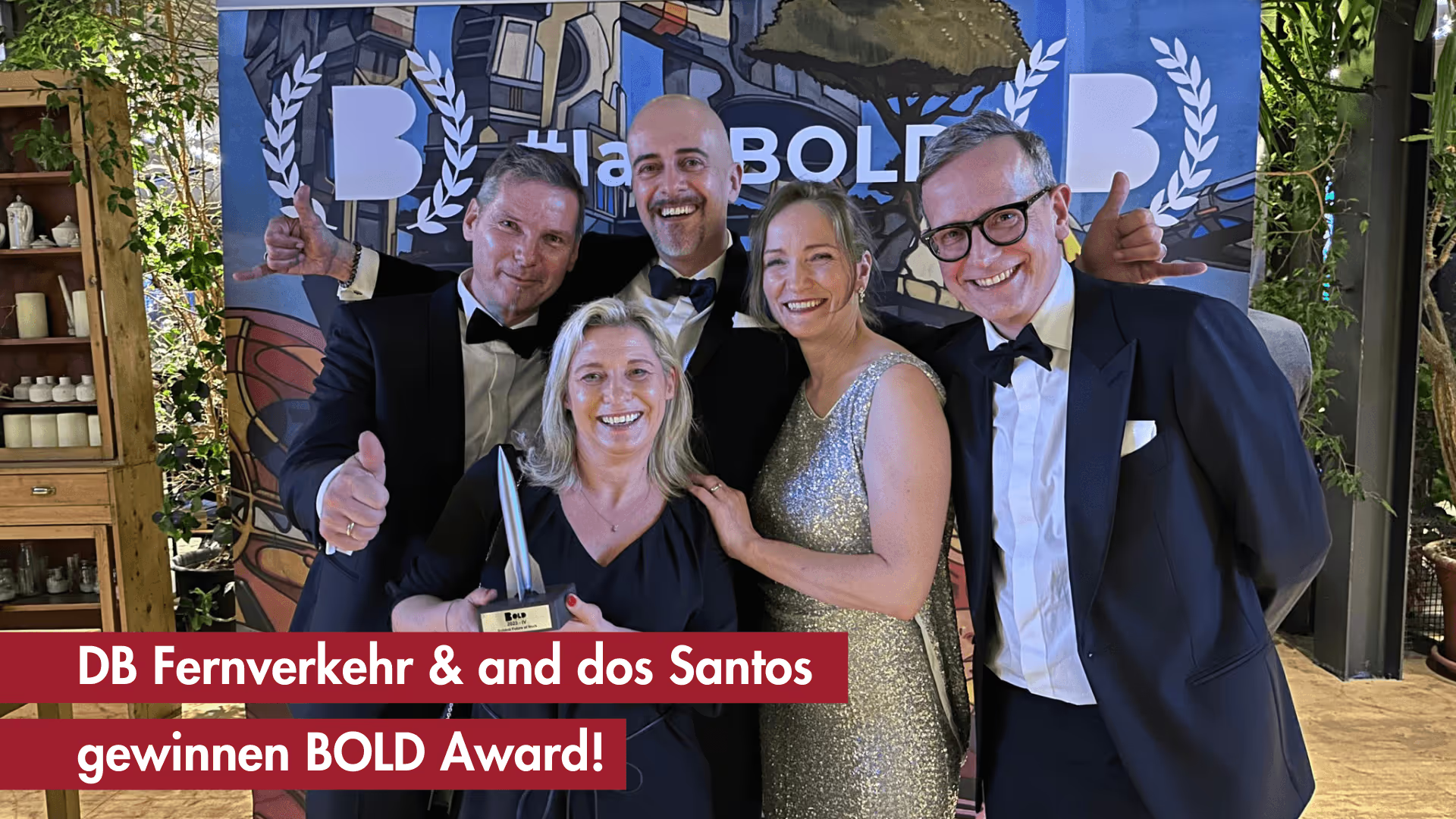
Bold Awards ceremony in Venice, March 2023 (from left): Steffen Renisch, Michaela Gisch, Ricardo dos Santos Miquelino, Jutta dos Santos Miquelino, Martin Jende
Martin Jende, Chief Human Resources Officer and Labor Director, Steffen Renisch, Head of Train Driver Qualification, both DB Fernverkehr AG, Frankfurt am Main, and Jutta dos Santos Miquelino, Co-CEO and Partner, and dos Santos GmbH, Berlin
Together with transformation consultancy and dos Santos, DB Fernverkehr AG won the renowned BOLD Award in the “Boldest Future of Work” category for its innovative approach to redesigning job profiles and workplace concepts for train operators.
The prize winners were selected by an audience of experts from 85 different countries and a top-class, international jury. The award was presented at the ceremony in Venice on March 31, 2023 and received enthusiastically by the authors of this contribution as well as Michaela Gisch (head of Tf V at DB Fernverkehr) and Ricardo dos Santos Miquelino (Co-CEO and dos Santos).
Development and background of the project
The “Employer of the Future” project, which has been implemented at DB Fernverkehr AG since 2018 as part of the “Strong Rail” strategy, started when Martin Jende (then Head of Train Vehicle Management (Tf)) set himself the task of designing a contemporary vision of the future for train drivers.
That's where and dos Santos came in. The think tank enables organizations to grow from within, to consciously become future-proof and to master the diverse technological and cultural challenges of change. To this end, it provides access to the knowledge of international opinion leaders from business, science, technology and culture and combines it with the knowledge of customers to create a “collective genius.” In concrete terms, this means that employees from the affected areas meet start-up founders, professors from leading universities, high-tech experts or even Academy Award winners in order to jointly develop and implement the solutions for transformation. That is exactly what happened as part of the “Employers of the Future” project.
After an intensive period of analysis, and dos Santos assembled a team of highly qualified, cultural thought leaders and international innovation experts for a series of Workbench Labs (Design Thinking Workshop Formats). During these intensive programs — each lasting around 9 weeks — this high-caliber collective worked with a core team of train drivers and managers from DB Fernverkehr to develop answers to the following questions:
- What is the future job description of train drivers?
- How do they want to learn and develop in the company and what are their expectations?
- How can the attractiveness and functionality of jobs be increased for future train drivers and railway employees?
- How are the values of the railway family put into practice?
- Who are the train drivers of the future and where do they work?
The driving force behind answering these questions is that rail transport is becoming more and more the focus of society, as the need for sustainable mobility is leading to the search for more environmentally friendly alternatives to cars and short-haul flights. However, the increasing shortage of skilled workers, an aging society and the changing career expectations of younger generations stand in the way of this mobility turnaround. The fact that, due to increasing digitization and automation in rail transport, there is also likely to be a certain degree of uncertainty as to how long the job profile of Tf will last.
Innovative workplace concepts are therefore needed which take into account the needs and motivations of both older and younger generations and in which, in addition to effectiveness and efficiency, appreciation and community, transparency, participation and individual personal development play an important role.
The future image of female train drivers interacting naturally and seamlessly with the machine is perhaps best described by the founder and CEO of AI company Kernel, Bryan Johnson: “The relationship between humans and artificial intelligence must be a symbiosis at some point.” In addition, the following holistic strategies, innovative solutions and detailed concepts were developed:
- The train drivers of the future
- The cab of the future for the next ICE generation
- The deployment sites of the future
The train drivers of the future
The decisive factors for the development of new job profiles are the massive shortage of skilled workers and the digitization of jobs, which is incorporated into the activities. It was therefore of great importance to design concrete measures to qualify and promote young talent in order to guarantee the necessary skills and abilities for train operators.
The team began by creating various personas to take into account the range of pain points and motivations for long-term employee engagement while balancing DB's corporate values with the needs and expectations of employees. Based on this result, the focus then shifted to leadership and learning platforms, which can promote active participation, transparency and community building among the TF.
The driver's cab of the future
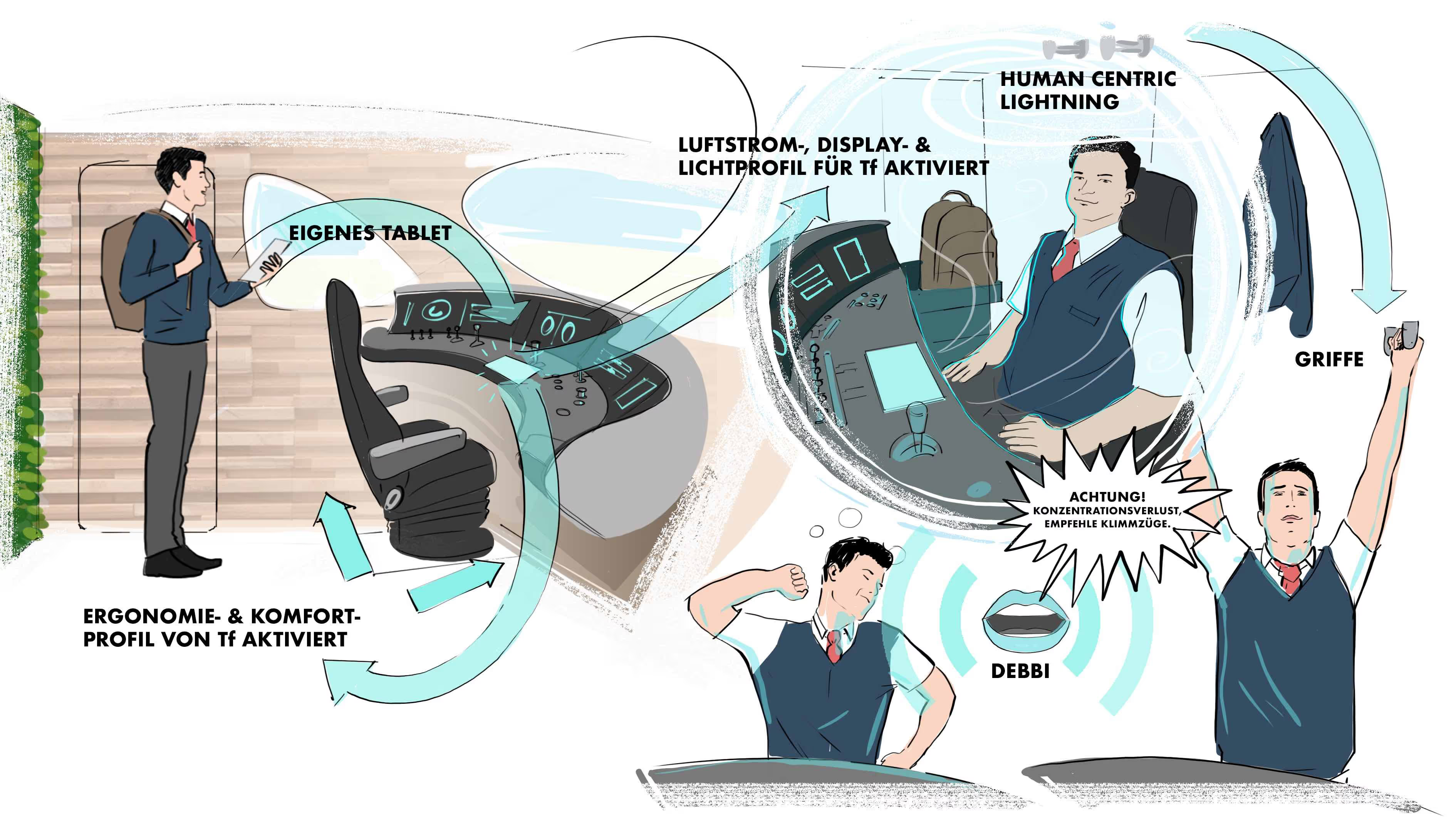
For the physical work area of Tf, the team next developed a concept for the cabin of the planned ICE generation for 2031, a cutting-edge design that has since been recognized as a potential basis for high-speed trains across Europe. This concept has brought to life the vision of train drivers who:
- be able to access their workplace securely and easily and perform their tasks by being digitally supported by cutting-edge technology, from biometric authorization to operating train control systems via mobile devices
- be able to maintain their physical well-being and attention even during long shifts, supported by a holistic workplace design (such as lighting, seats, ventilation and control displays)
- communicate with colleagues and control centers in real time via IoT-based connectivity to ensure smooth navigation, manage environmental, infrastructural or technical disruptions as efficiently as possible, and ensure the punctuality and accuracy of train operations
- improves efficiency and time management, e.g. through digital twins for maintenance work as well as digital checklists and smart system instructions.
The deployment site of the future
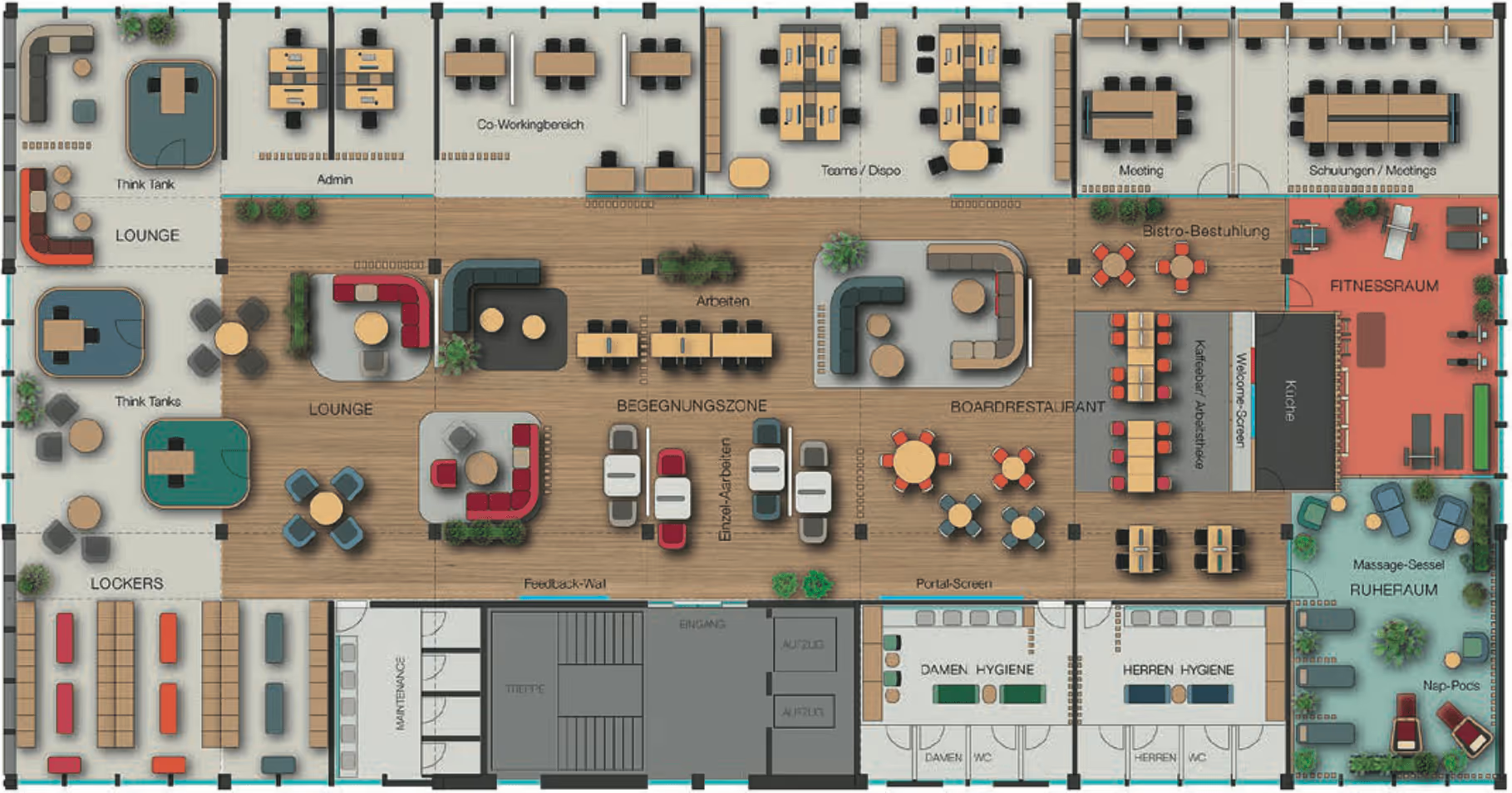
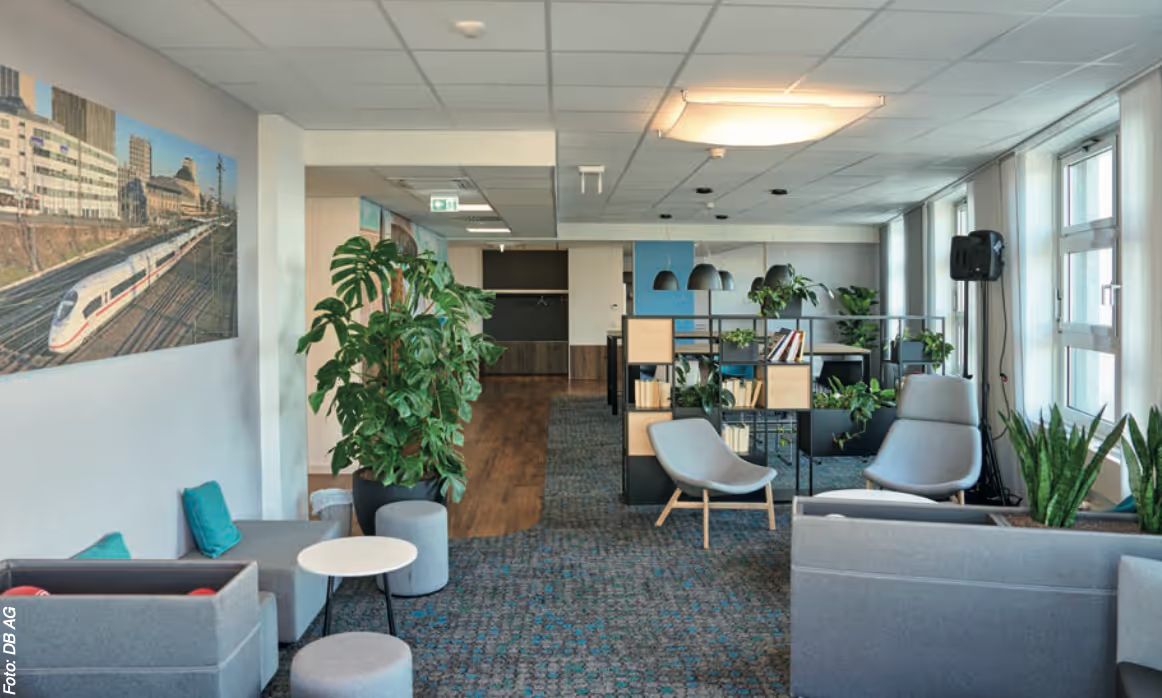
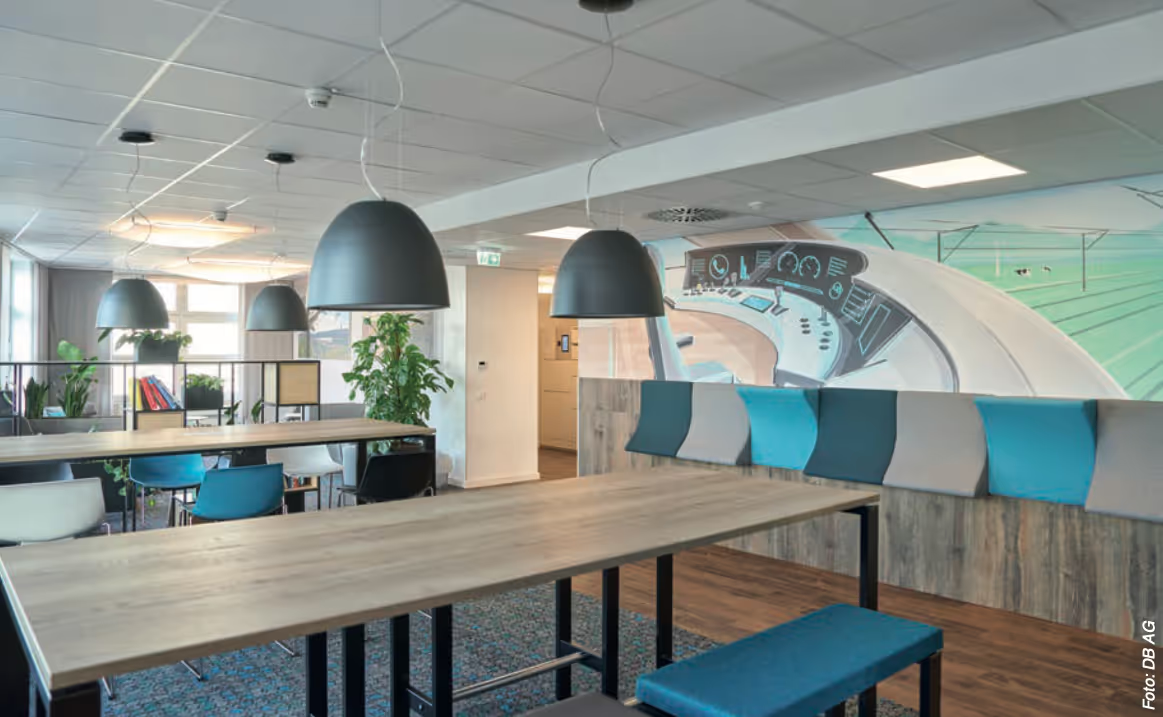
The third topic focused on the deployment site, where train drivers rest, train and exchange ideas with colleagues between their long-distance shifts. Here, the team developed a holistic solution that not only meets the physical needs of employees — such as a balanced diet or comfortable rest rooms, but also promotes their mental and emotional well-being. New means of communication, which are integrated into the design, offer employees the opportunity not only to work and learn in this space, but above all to support them in living their strong community.
This innovative concept has already been implemented with the opening of a new DB long-distance transport operation in Mannheim and received much praise from employees and management. This new location not only creates additional jobs. It is a prototype for all other locations. True to the motto “Create enthusiasm as soon as you come in”, there is a meeting space for employees where they can exchange ideas and relax, but above all feel good.
The result is making waves
The solutions, in particular the concept for the next-generation ICE driver's cab, have great potential for Europe-wide application and work on their implementation has already begun. Based on an article that was published in Deine Bahn back in 2021, interest in this concept grew among train designers.
At the RedCabin European Railway Innovation Interior Summit 2022, representatives of the project team explored the question: “How is cultural and digital change affecting our workplaces and work areas? “Using the concept of the workplace of the future, they shed light on the changes that Tf is facing across Europe, as well as their need for better connectivity and operational excellence in conjunction with various rail trades.
At InnoTrans 2022, senior engineers from Siemens Mobility invited people to the High-Speed Experience Lounge to think together about the Tf experience on board the train, which closely links their experiences with those of passengers in terms of comfort and simplicity.
outlook
And what about the other operational areas of DB long-distance transport? ... and dos Santos has since been commissioned to also develop the “job profile of the future” for the more than 8,000 in-flight service employees. Driven by the vision of creating the basis for motivated and empathetic employees whose competence, efficiency and satisfaction inspire passengers and significantly optimize the travel experience in harmonious interaction with many work-making digital services.
Everyone involved is excited to see how the results will further impact the quality of services on trains, the working environment of thousands of employees and the experiences of millions of passengers traveling across Europe by rail.
Source: “Deine Bahn” magazine, issue 07/2023